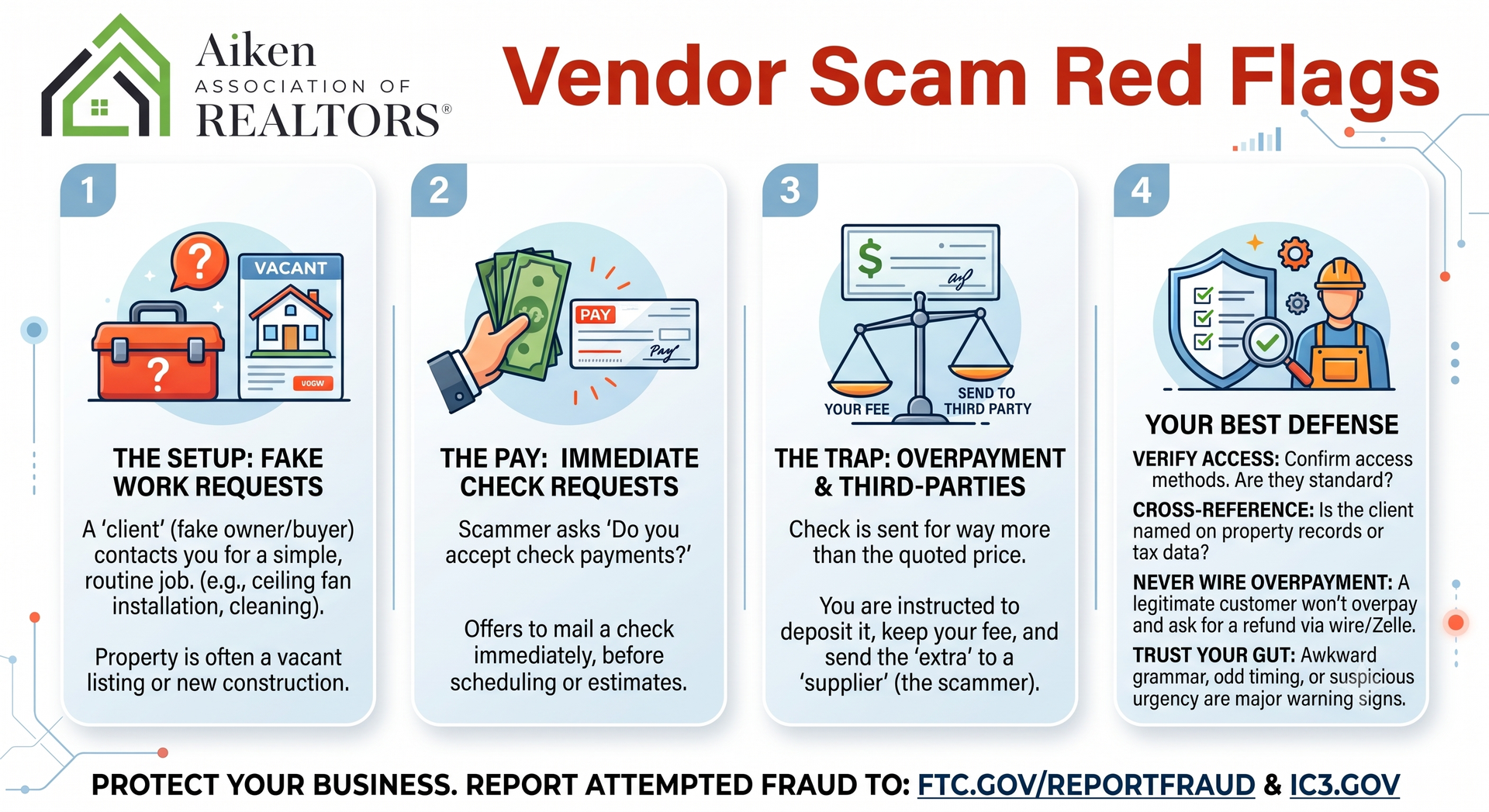
As real estate professionals, keeping our listings, clients, and industry partners safe is a top priority. Recently, local listing agents and service vendors in our area encountered a sophisticated variation of a fake check / third-party service scam targeting a local new-construction property.
We want to share how this scam operates, the red flags to watch for, and the actionable steps you can take to protect your listings and vendor network.
How the Scam Works:
|
- Targeting Online Listings: Scammers search public MLS data and listing portals for vacant homes, spec homes, or new construction properties. They use the real address to impersonate the property owner or buyer.
- Contacting Local Vendors: The fraudster reaches out to local contractors (HVAC, electricians, painters, cleaners) pretending to need routine work done on the house—such as installing ceiling fans or light fixtures.
- Demanding to Pay by Check: Right away, the scammer asks if the business accepts check payments. They offer to mail a check immediately before any work is scheduled or an on-site estimate is performed.
- The "Third-Party Key & Materials" Setup: When asked about accessing the home, the scammer provides an excuse for why they can’t be there (e.g., traveling, busy at a conference). They claim a "supplier" or "courier" will bring the keys and materials to the job site.
- The Overpayment Trap: The scammer mails a fraudulent or counterfeit check for far more than the quoted job price (e.g., sending a $3,000 check for a $720 estimate). They instruct the contractor to deposit the check, keep their fee, and wire or Zelle the remaining balance to the "supplier" to pay for keys/materials.
- The Financial Loss: Days later, the bank identifies the check as fake. The bank reverses the deposit, leaving the vendor out the entire amount—plus any funds they wired to the scammer.
|
Red Flags to Share with Your Vendor Partners
Help protect the local contractors and service providers you work with every day by sharing these warning signs:
|
- Unsolicited requests for check payments before any formal agreement or site visit.
- Grammar, awkward phrasing, or generic greetings (e.g., "So kindly get back to me..." or vague excuses about being out of town).
- Inconsistencies in ownership records when cross-referencing the client's name with property records or tax data.
- Requests involving third parties delivering keys or equipment rather than standard lockbox or listing agent access.
|
Best Practices for REALTORS® & Listing Agents
|
- Secure Job Sites & Lockboxes: Ensure that electronic lockboxes, door codes, and key storage at vacant or new-construction properties are monitored and kept secure. (DO NOT USE COMBO LOCKBOXES)
- Warn Your Preferred Vendors: If you regularly refer electricians, painters, staging companies, or HVAC techs to your listings, send them a quick heads-up about this tactic.
- Verify Owner Identity: Always verify that individuals requesting service on your active listings are authorized sellers or contracted buyers.
|
What To Do If You Encounter Fraud
|
- Report it online: File a report with the Federal Trade Commission at reportfraud.ftc.gov and the FBI’s Internet Crime Complaint Center at ic3.gov.
- Notify local authorities: If an unknown party attempts physical access to a vacant property, contact local law enforcement immediately.
- Keep documentation: Retain copies of email chains, phone numbers, and check images to assist with fraud reports.
|
Staying informed is our best defense. Share this alert with your team and vendor partners to help keep our local real estate community secure!
|
|
|
|